SinClinic+: a clinic website the clinic runs itself
A clinic website with procedures, doctor profiles and a price list under the clinic’s own management. The working website is ready; the launch is waiting for the clinic to add its content.


A price list that cannot wait for a developer
The clinic offers dozens of procedures, each with its own price and the doctor who performs it. Prices change, doctors come and go, copy gets tuned. A website with all that hard-wired in the code goes stale within a month.
So the brief was not only to build a website, but to build it so the clinic can keep it up itself. Bookings and payments are handled by a separate application; the site has a point prepared for it.
Six parts that keep the site current
A structure for procedures
Categories, individual procedures and their details. A patient finds a procedure by area or by name, not by the clinic’s internal structure.
Doctor profiles
Education, focus and the procedures the doctor performs. The procedure detail links to the doctor and back.
A price list by category
Price categories and items are managed by the clinic itself. A price change is an edit in the admin, not a task for a developer.
Content in Keystatic
Copy, images, FAQ, references and SEO descriptions. Editors are invited by e-mail and need no GitHub account.
Speed as part of the brief
Pages are generated ahead of time, images are optimised at build time and there is a minimum of client-side JavaScript.
A point for bookings
Appointments and payments are handled by a separate application. The site has a point prepared where the booking link goes; otherwise it leads to the enquiry form.
An admin with no GitHub account
The content is versioned in the repository, but the editor need not know that. Keystatic Cloud sends an invitation by e-mail and the clinic edits in a web interface: categories, procedures, doctors, price items, FAQ, references and SEO descriptions.
After saving, a short build runs and the change is out. Layout and design stay in the code, so editing content cannot break the site.
Four stages, each with an outcome
Brief and structure
We went through what a patient needs to find before a consultation. That produced the structure of procedures, doctors and the price list.
Design from the prototype
Typography, colours, grids and the mega menu came from the supplied prototype and we carried them through to a working state.
Development and content
Astro with static pages, a CMS schema shaped by the real content and a script that regenerates the default data.
Handing over the admin
The clinic got access to Keystatic Cloud. We invite editors by e-mail; a change goes out after a short build.
Two decisions that keep the site current
Content in the clinic’s hands
Procedures, doctors and the price list are not in the code but in an admin with a fixed schema. The clinic changes prices itself and an editor still cannot break the page. The cost is a short build after every edit.
Bookings as a separate application
A booking system has a different life cycle than a website. Keeping them apart means a change to the site cannot endanger appointments, and swapping the booking tool does not mean a new website.
A static site, content in the cloud
Pages are generated ahead of time; the server side serves only the admin.
The scope of the solution
Working on something similar?
Tell us what you change through a developer today. We reply within two business days.
What else we built

 Walio: a loyalty system for businessesA card in the wallet, a terminal for staff and a portal with reporting.
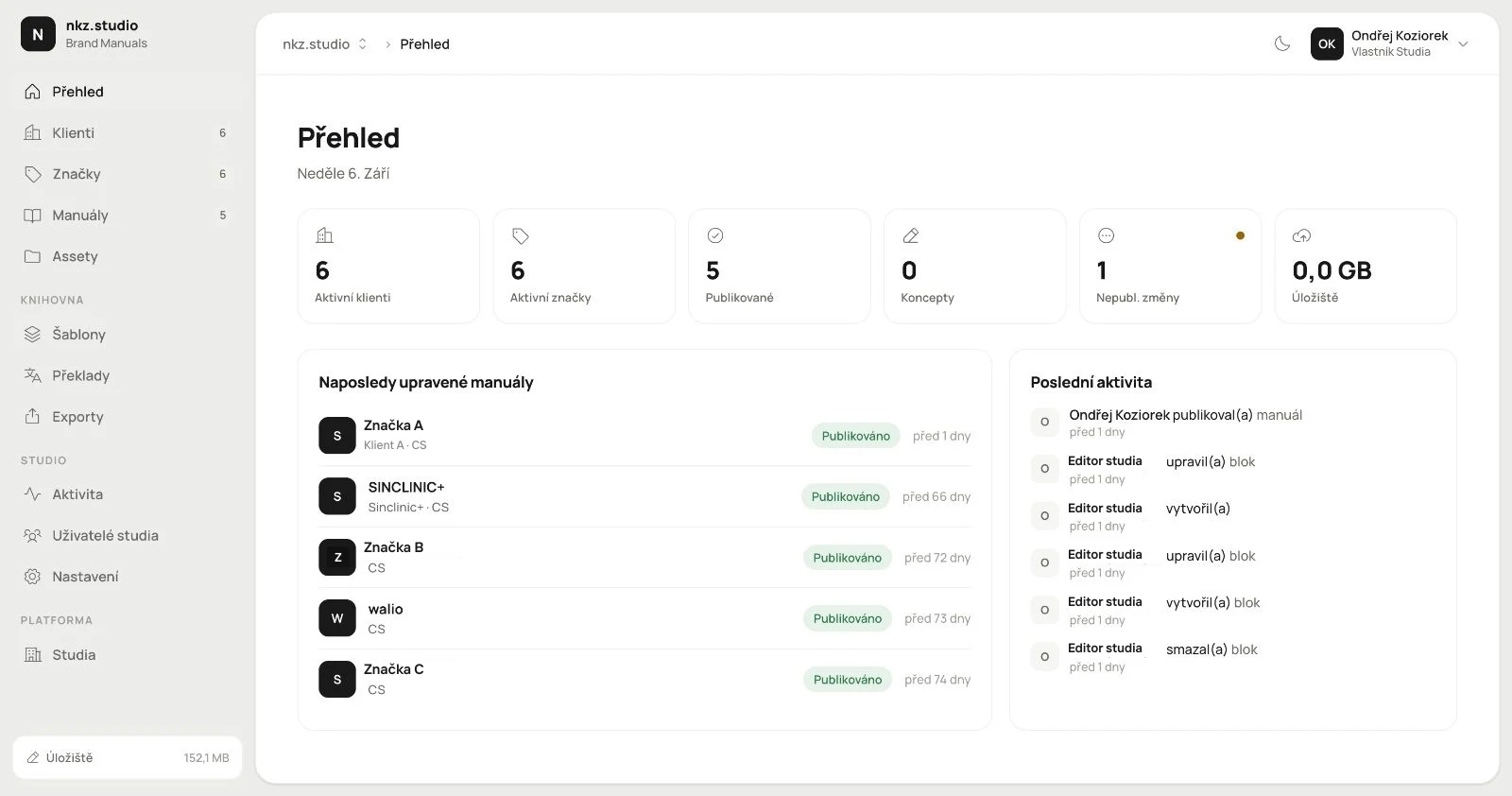 Branuál: a brand manual as a website, not a PDFPages, blocks and an asset library with publishing. Our own product.
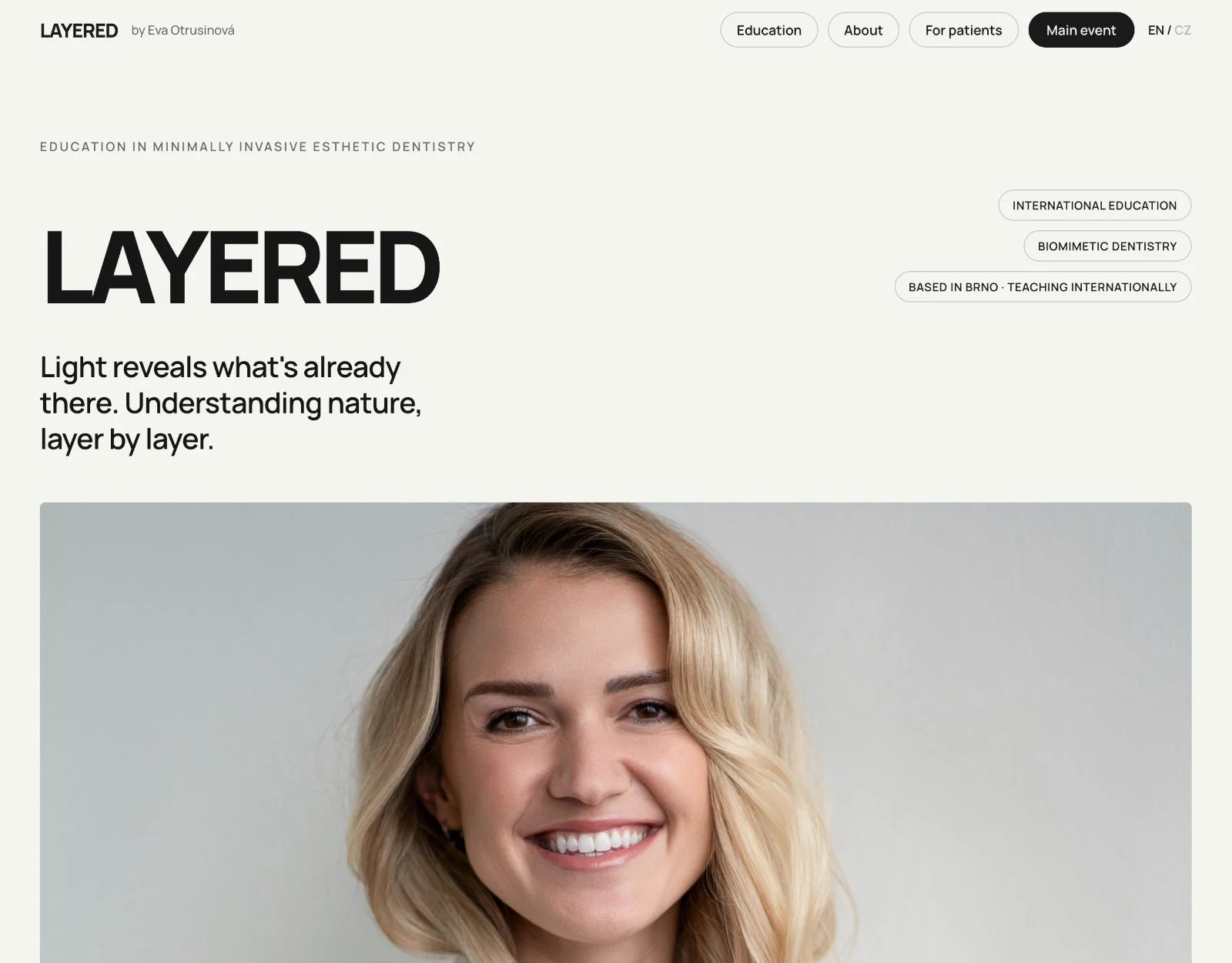 Layered: a website that sells the course and checks the guest inBooking with live capacity, payment and confirmation in one place.