Walio: a loyalty system for businesses
Our own loyalty system for businesses. We built the customer card in Apple and Google Wallet, the terminal for staff, the portal and the sales website. We designed each part around who works with it: the customer, the staff or the venue owner.

A loyalty programme without your own IT
The venues we worked with on branding all had the same problem: paper cards or stamps that nobody could measure. Ready-made systems were expensive, tied to one point-of-sale system, or required the customer to install another app.
We built Walio as our own product because we wanted to decide the whole chain: how the card looks in the phone, what the staff behind the bar see and what data the owner gets. On client projects we follow the brief. Here we had to write the brief ourselves and then rewrite it several times as the operation taught us.
Nine parts of one product
A customer card in the phone
A digital loyalty card without installing an app. The customer adds it to the wallet and just shows it at the venue.
A portal for venues
An overview of the programme, reward management, transaction history and rule settings without needing a developer.
A terminal for staff
Fast card scanning and point crediting on a tablet or phone. Designed for the pace behind a bar.
Reporting and ROI
Who comes back, how often and with what average spend. A monthly report arrives by e-mail and the overview estimates the value of the programme.
The walio.cz website
A sales site on Astro: plans, feature and segment pages, a comparison with paper cards and an enquiry form. The content lives in data files Walio manages itself.
Notifications
A message through the wallet lands straight on the phone screen. The venue picks a segment, writes the text and sends. Alongside manual messages there are automatic ones: close to a reward, long time no see, birthday.
Tickets and events
A second kind of pass in the wallet next to the loyalty card. The service fee is paid by the buyer; nothing is deducted from the venue’s price.
Slot booking
A public booking page without sign-in, linked to the card in the wallet. On higher plans e-mail reminders, staff calendars and payment up front through Stripe.
Google reviews
After a visit Walio points happy customers towards writing a review, without the staff having to ask every time.
An in-house product runs differently
Defining the product
We wrote the brief ourselves: what the programme has to do in one venue.
Prototype and pilot
The first version ran in production. We watched where the staff hesitated.
Rebuilding the core
We rewrote the reward model so a new venue does not mean a code change.
Running and growing it
Walio runs as a product. We ship changes based on data from the operation.
Two decisions that hold it together
A card in the wallet, not an app
Installing an app for a coffee is a hurdle many guests will not clear. Almost everyone has a wallet in the phone, the customer adds the card without installing an app and the venue stays in touch through messages from the wallet. The price is that Apple and Google set the wallet rules.
We run the passes on our own infrastructure
Walio signs the passes on its own infrastructure, not through a third-party service. That keeps issuing cards under our own control, and watching the certificates stays with us too.
Two parts, two stacks
The application runs on Next.js over Supabase, the sales website on Astro. Each part has different demands on running it and on who makes changes in it.
What Walio does, screen by screen
For each part you can see what the staff do and what the owner gets.
The card in the mobile wallet
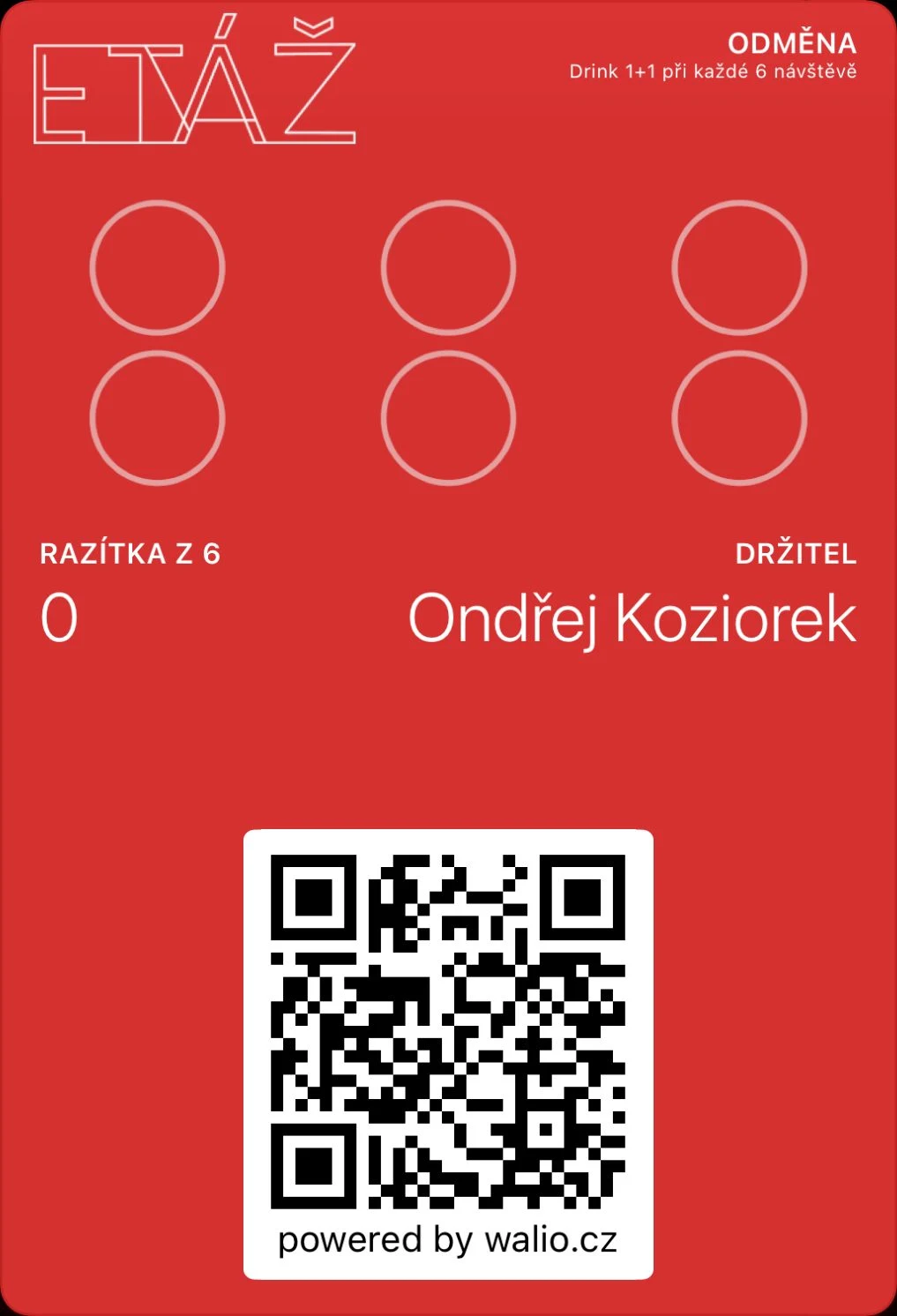
The only place the end customer meets the product. They add the card to Apple or Google Wallet without installing an app. It holds the current number of stamps, the reward condition and a QR code for the staff. The venue recolours it and rewrites the copy in its own identity.
The scanner behind the bar
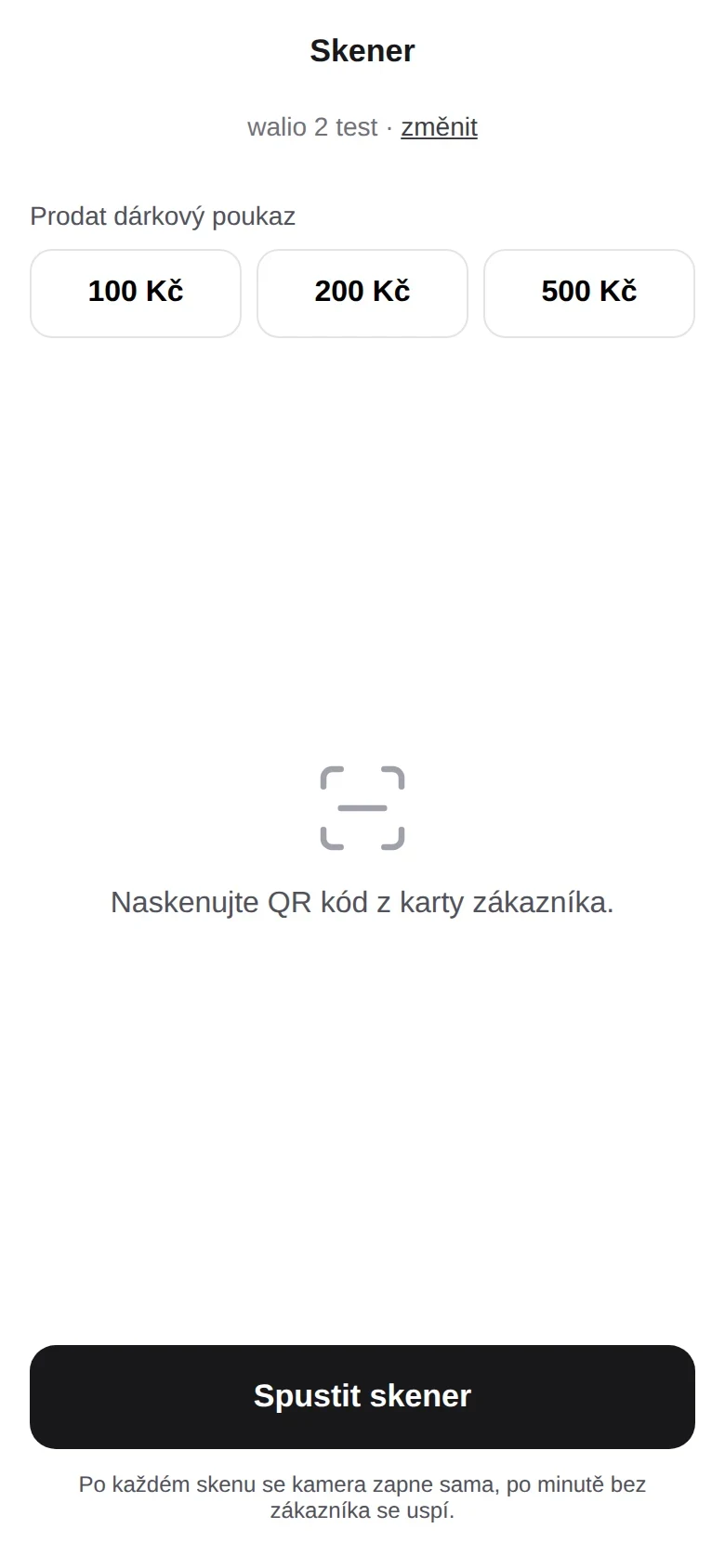
Staff open the scanner in a browser on a phone or tablet and scan the QR code on the card. A stamp is one tap, with no point-of-sale system. Offline, stamps are saved and sent once the connection is back. Gift vouchers can be sold from the scanner too.
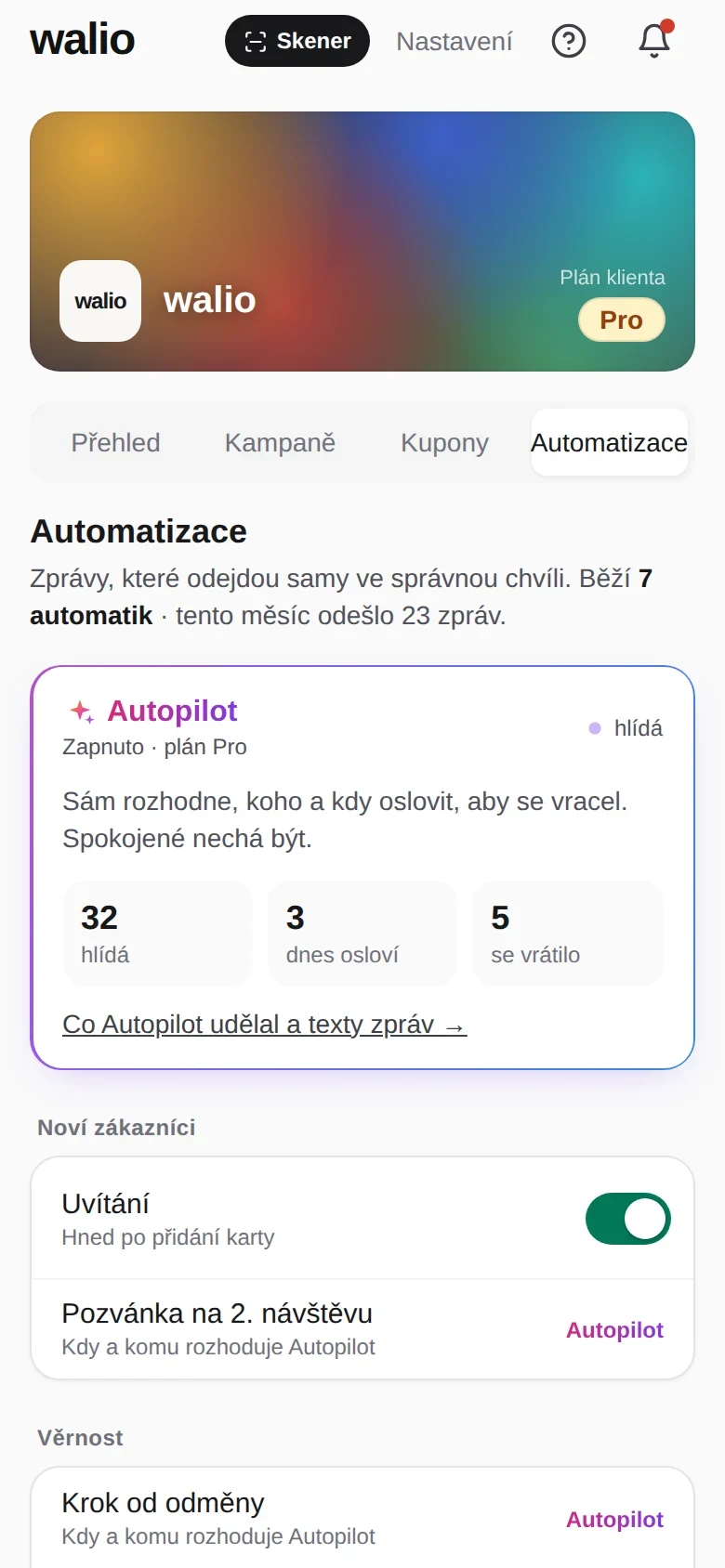
Autopilot
Autopilot decides on its own whom to contact and when, so they come back, and leaves happy customers alone. Next to it run automations such as a welcome after the card is added. The venue sees how many customers Autopilot watches and how many came back.
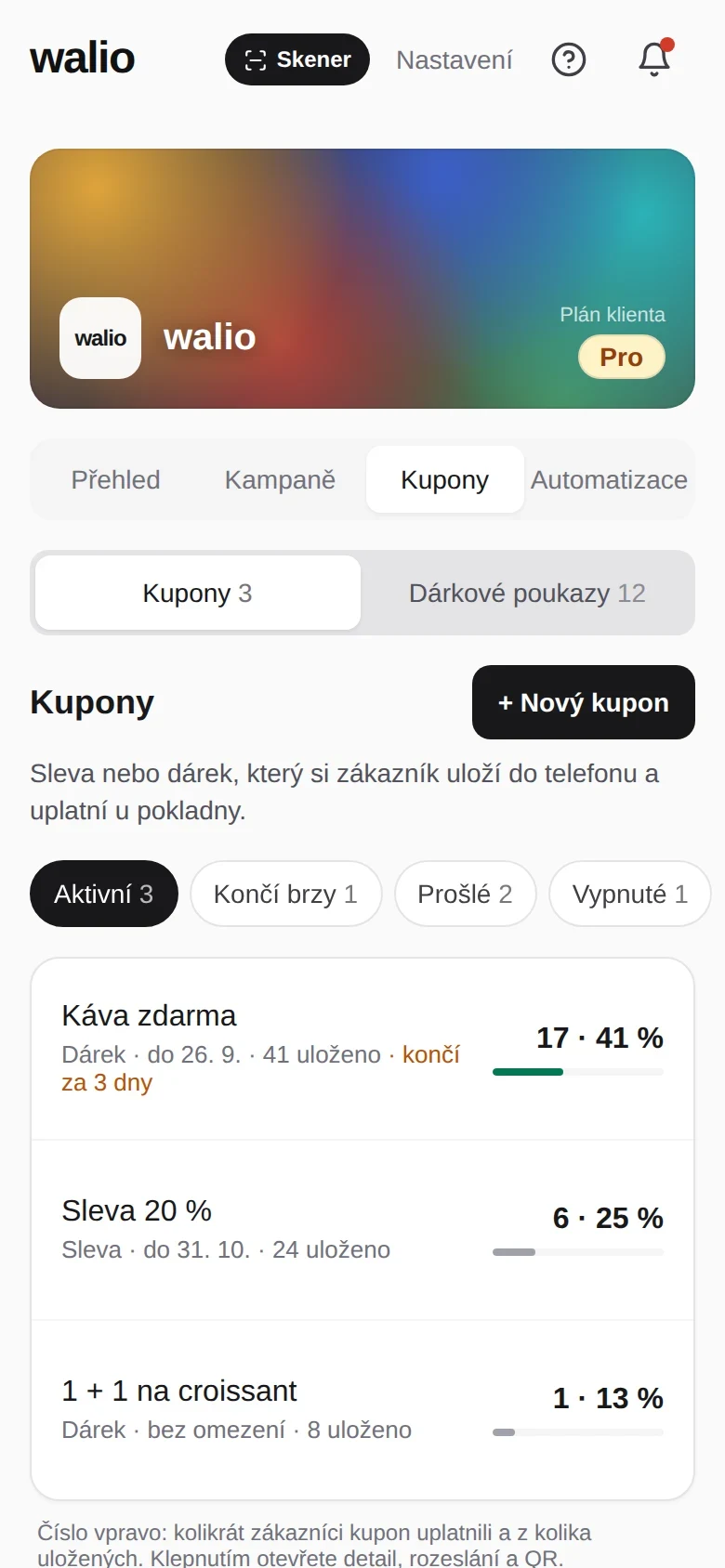
Coupons and gift vouchers
The venue sends a coupon to wallets straight away or on a schedule and sees how many people redeemed it. Staff sell a gift voucher at the counter and the remaining value stays on the customer’s phone.
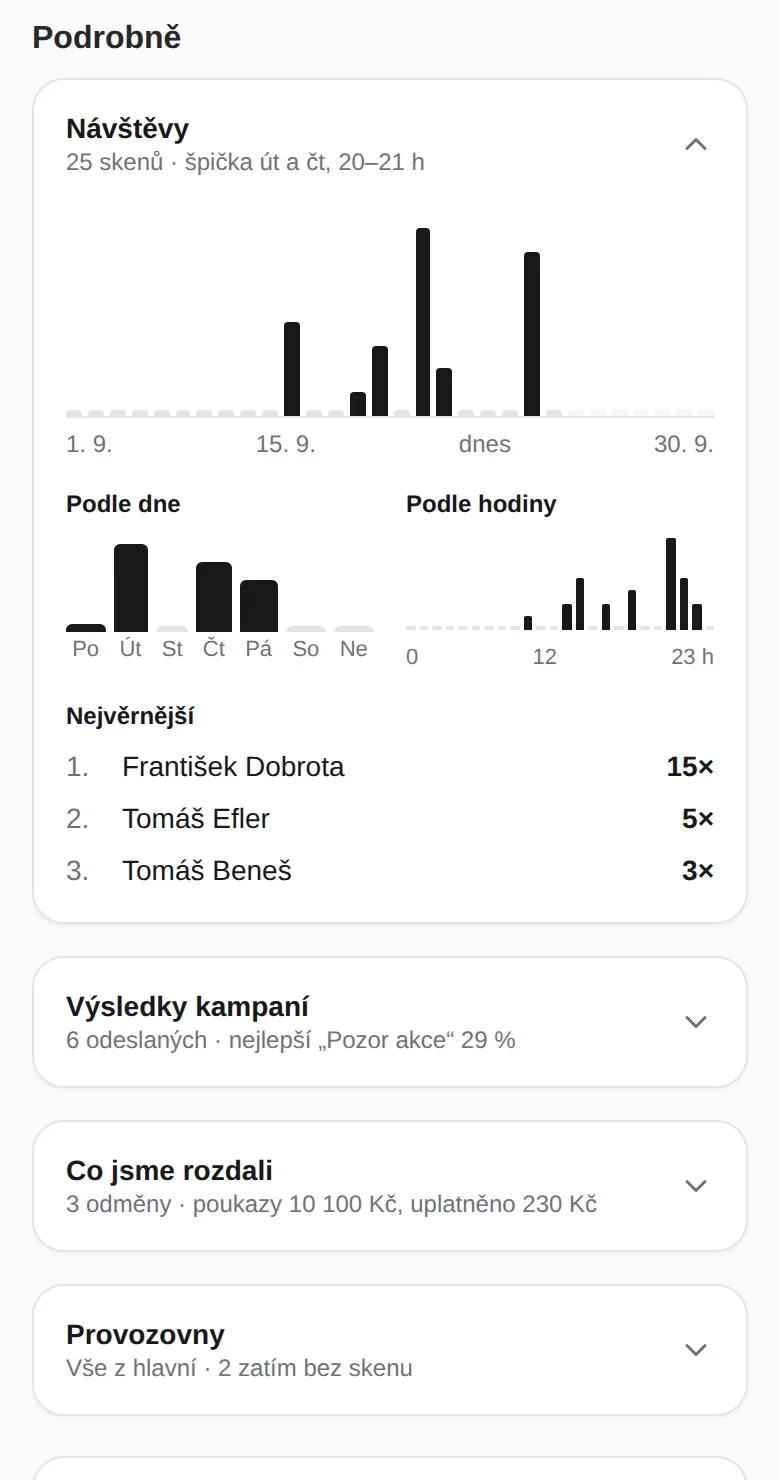
Visit statistics
Visits by day and hour, the busiest time of the week and the most loyal customers. Next to that, campaign results and an overview of what the venue gave away in rewards and vouchers.
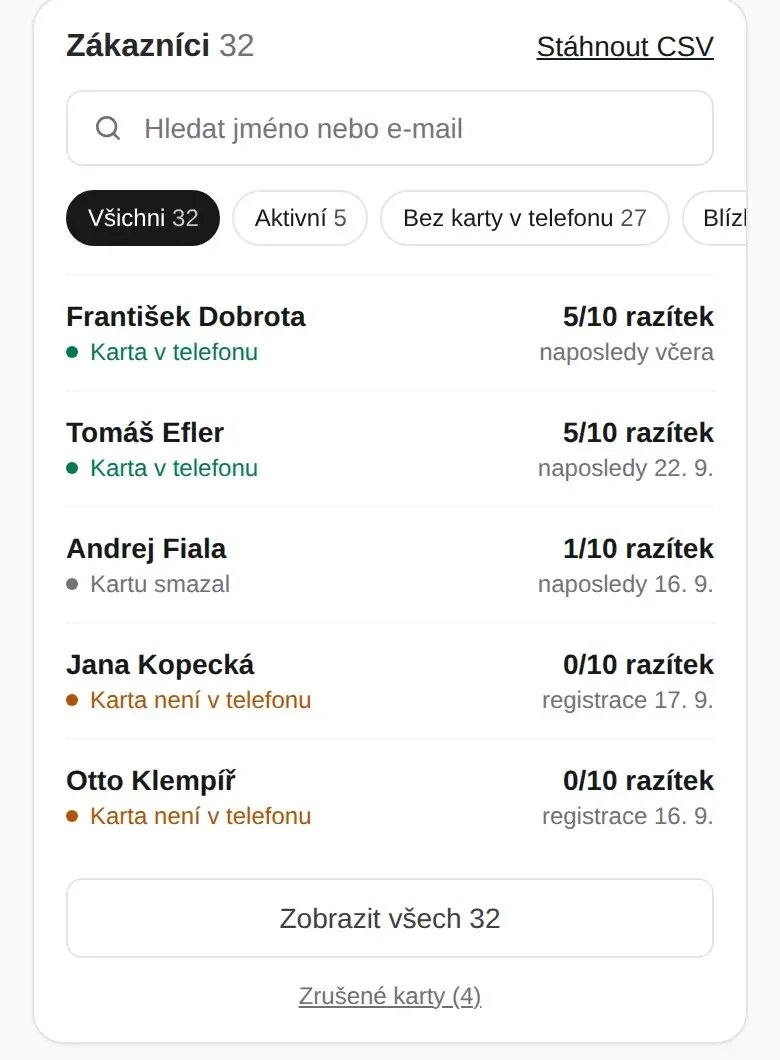
Customer overview
A list of card holders with their stamps, last visit and whether the card is on their phone. The venue can see who is worth a reminder and export the data to CSV.
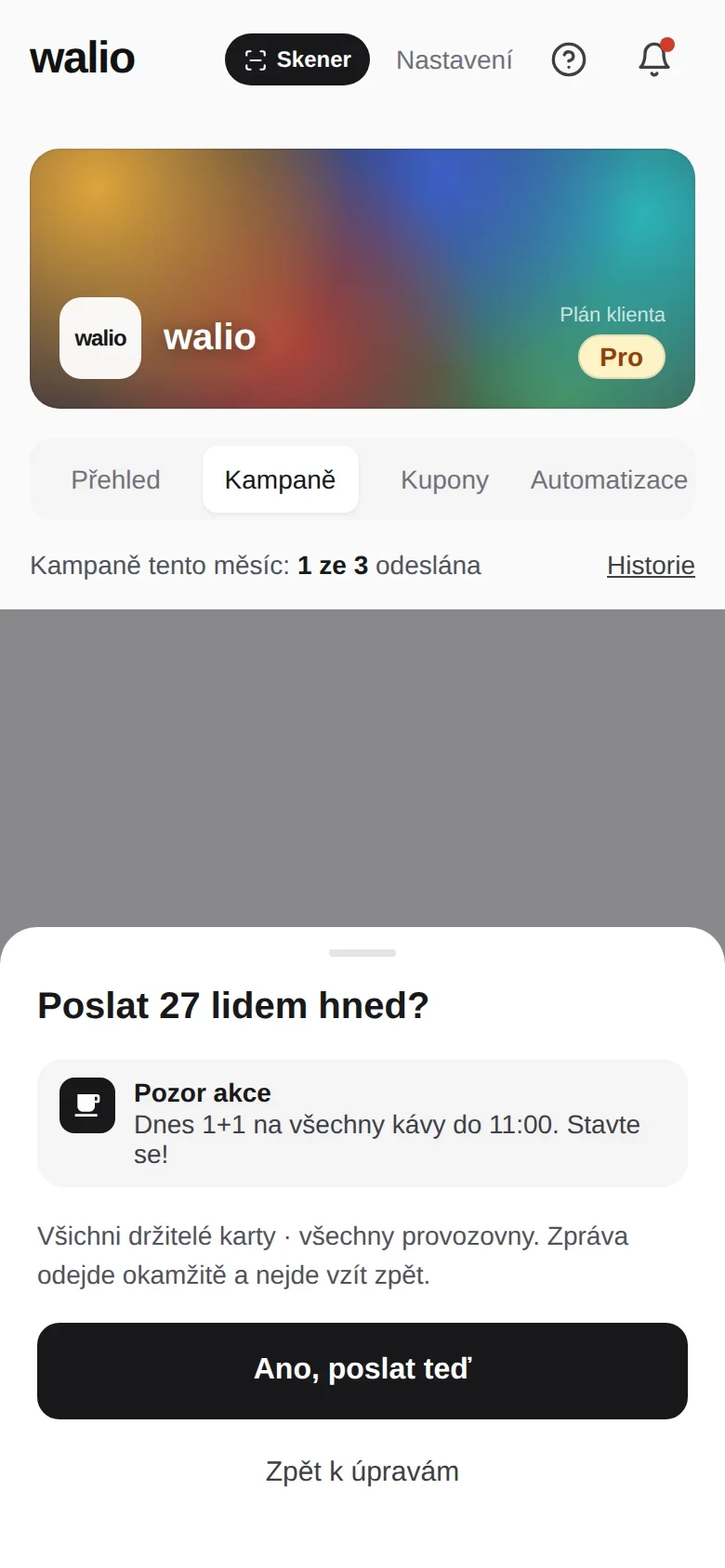
Notifications straight to the screen
The customer gets the message on the phone screen through the wallet, with no app and no notification permission. The venue writes the text, picks a group and before sending sees who gets it and how it will look.
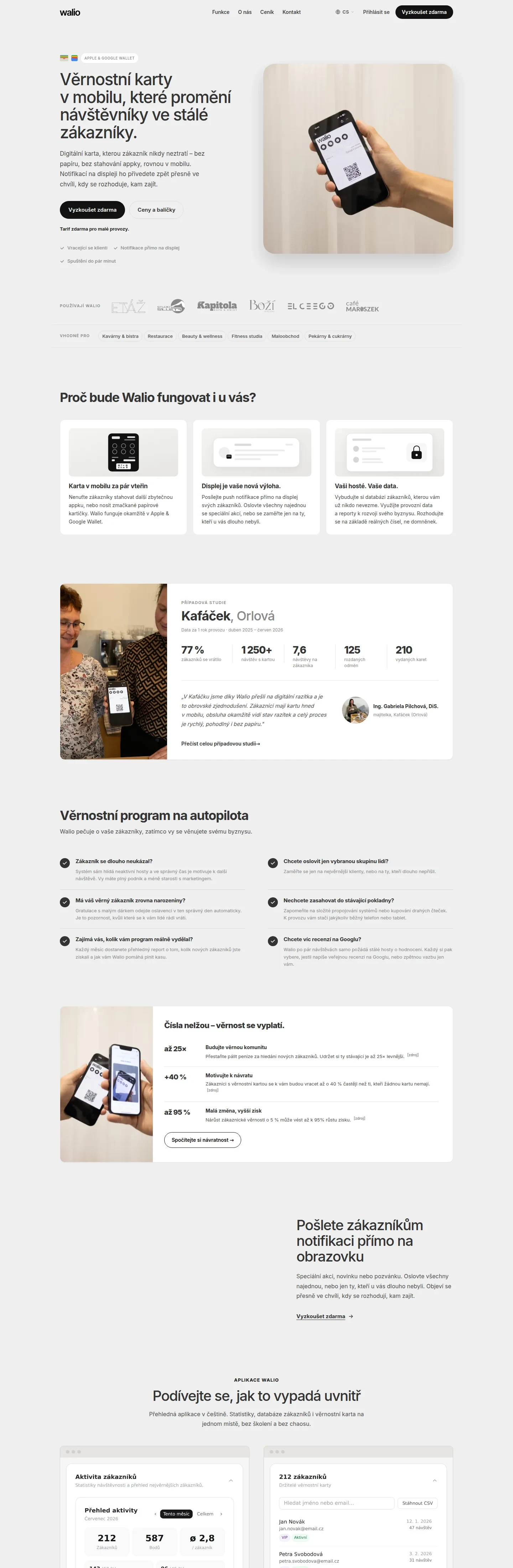
A sales site with plans
The site explains the product, shows the plans including the free one and collects enquiries. Content, plans and references Walio manages itself.
A portal for the owner
One place for the programme, rewards, customers and reporting. Right at the top it shows what Walio brought the venue and how many customers come back. Access is by role, so the staff see only the scanner.
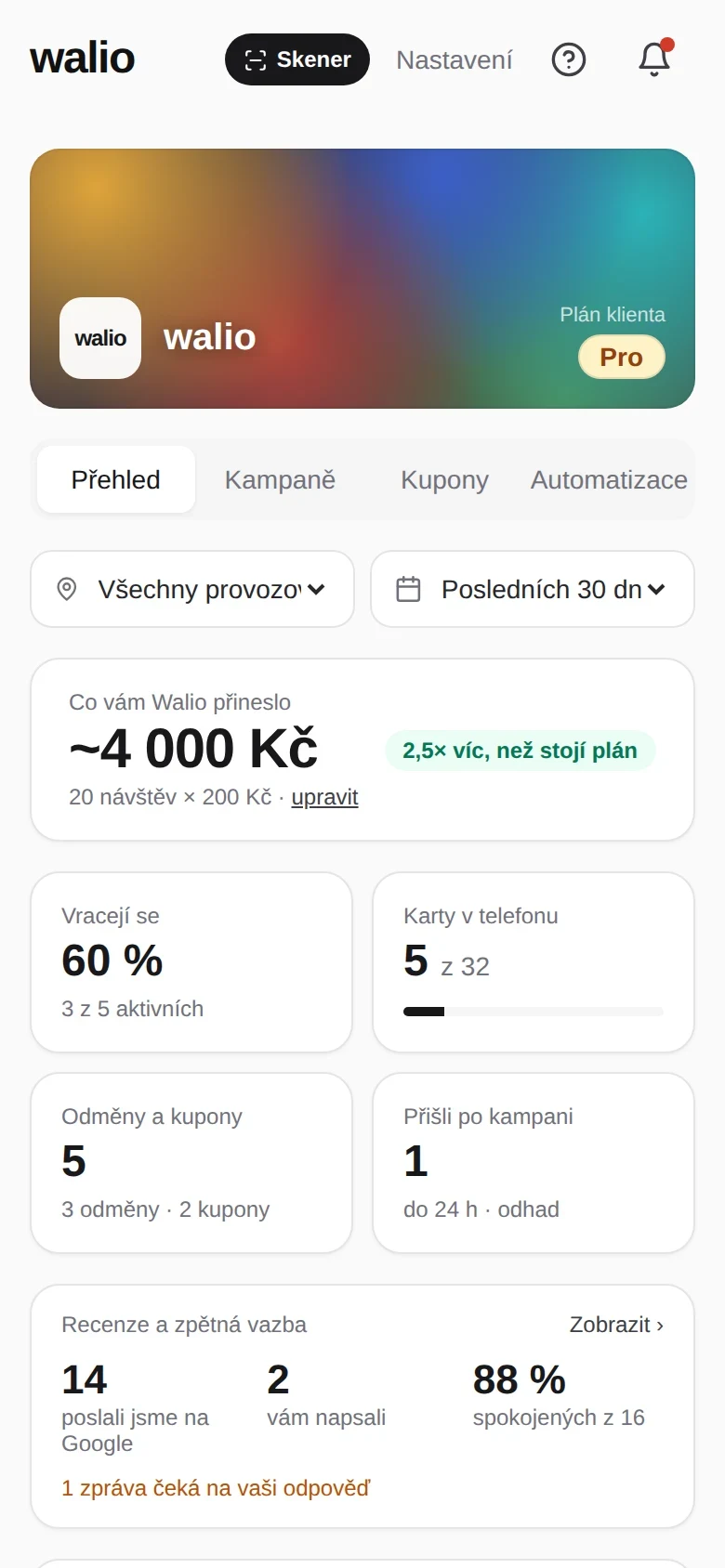
The scope of the solution
Our own product keeps us honest. When something does not work, we deal with it, not the client.nkz.dev, the Walio team
Working on something similar?
Tell us what you are solving. We reply within two business days.
What else we built

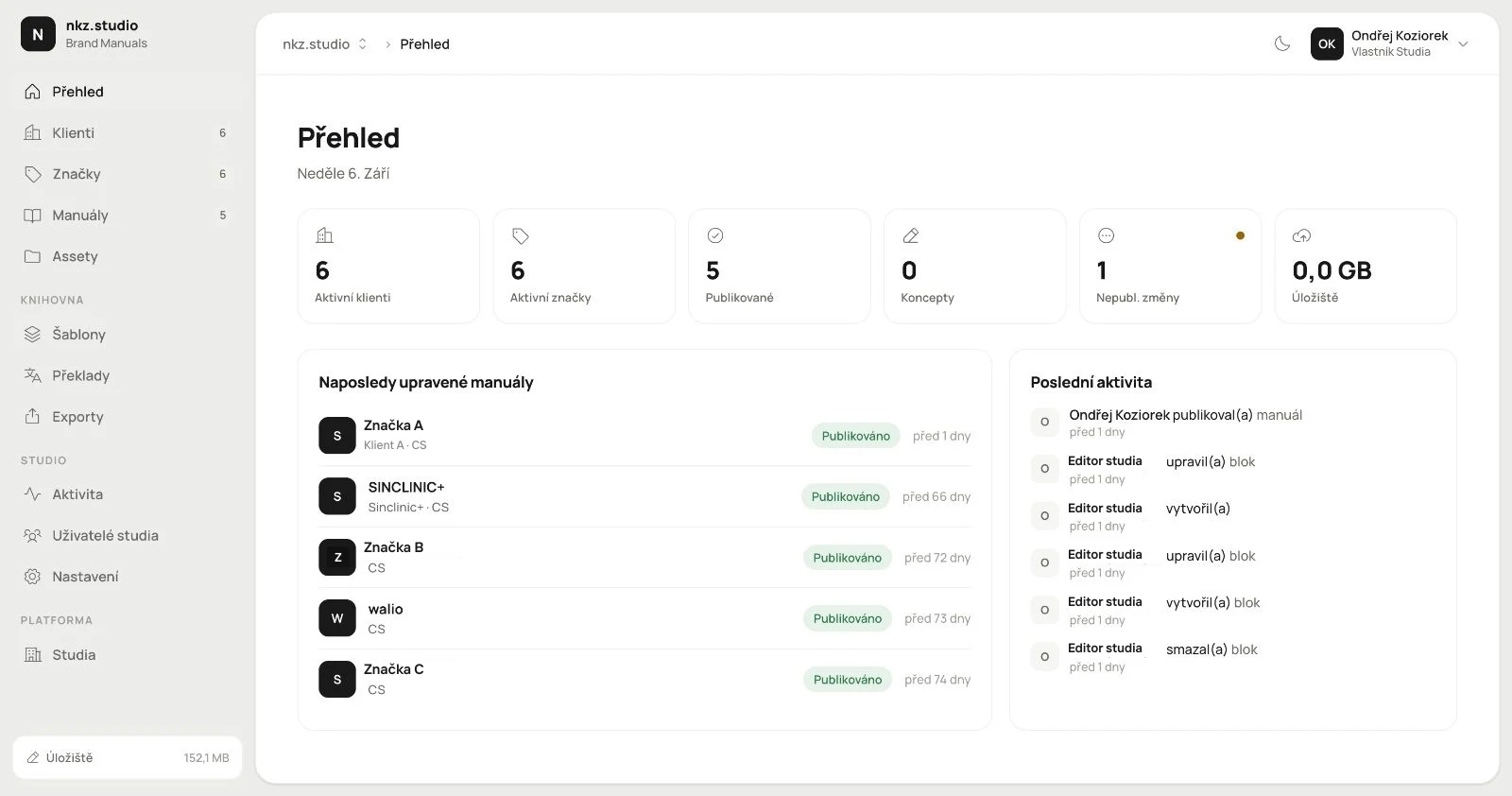 Branuál: a brand manual as a website, not a PDFPages, blocks and an asset library with publishing. Our own product.
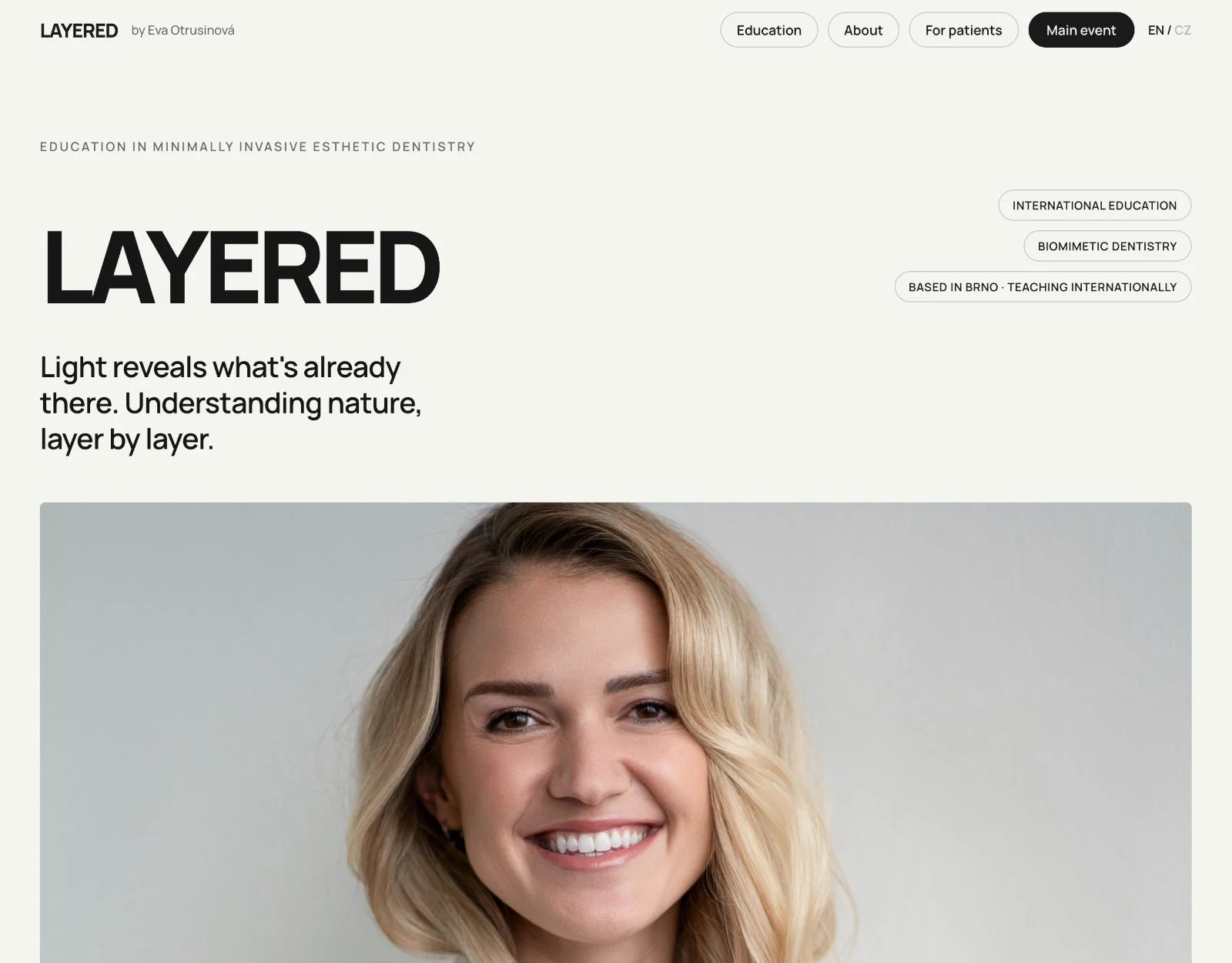 Layered: a website that sells the course and checks the guest inBooking with live capacity, payment and confirmation in one place.
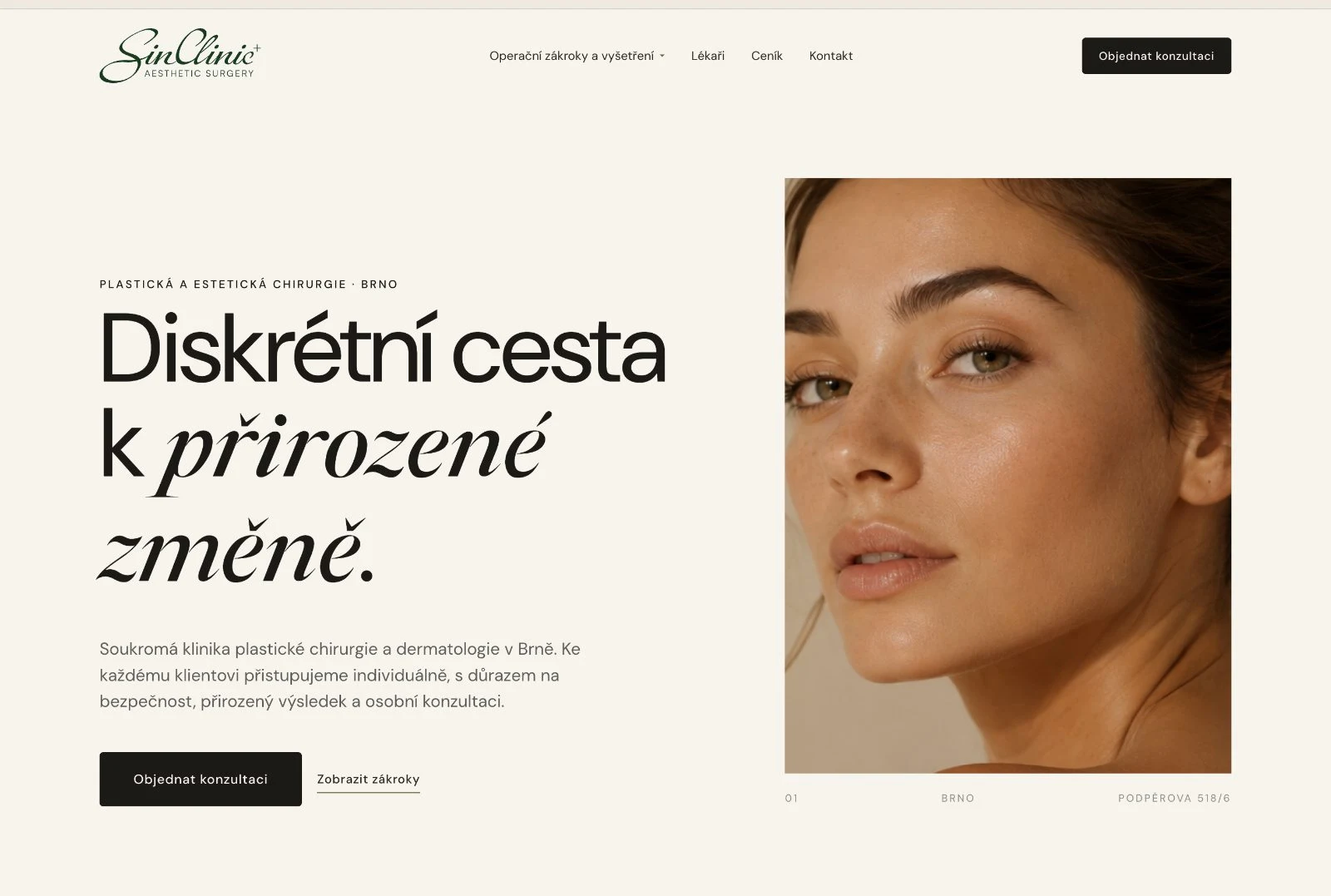 SinClinic+: a clinic website the clinic runs itselfThe clinic edits procedures, doctors and the price list in Keystatic.