Why a wallet and not an app
A loyalty scheme lives or dies on whether the customer picks it up at all. For a café or a salon, installing an app is the hurdle many people stop at. In the usual scenario, the card can be added to a supported wallet without installing a separate app. The exact flow depends on the platform and how the card is issued. That is exactly what Walio is built on.
The price is that Apple and Google set the rules. You fit their format or nothing. The good news is that the format does more than most people expect.
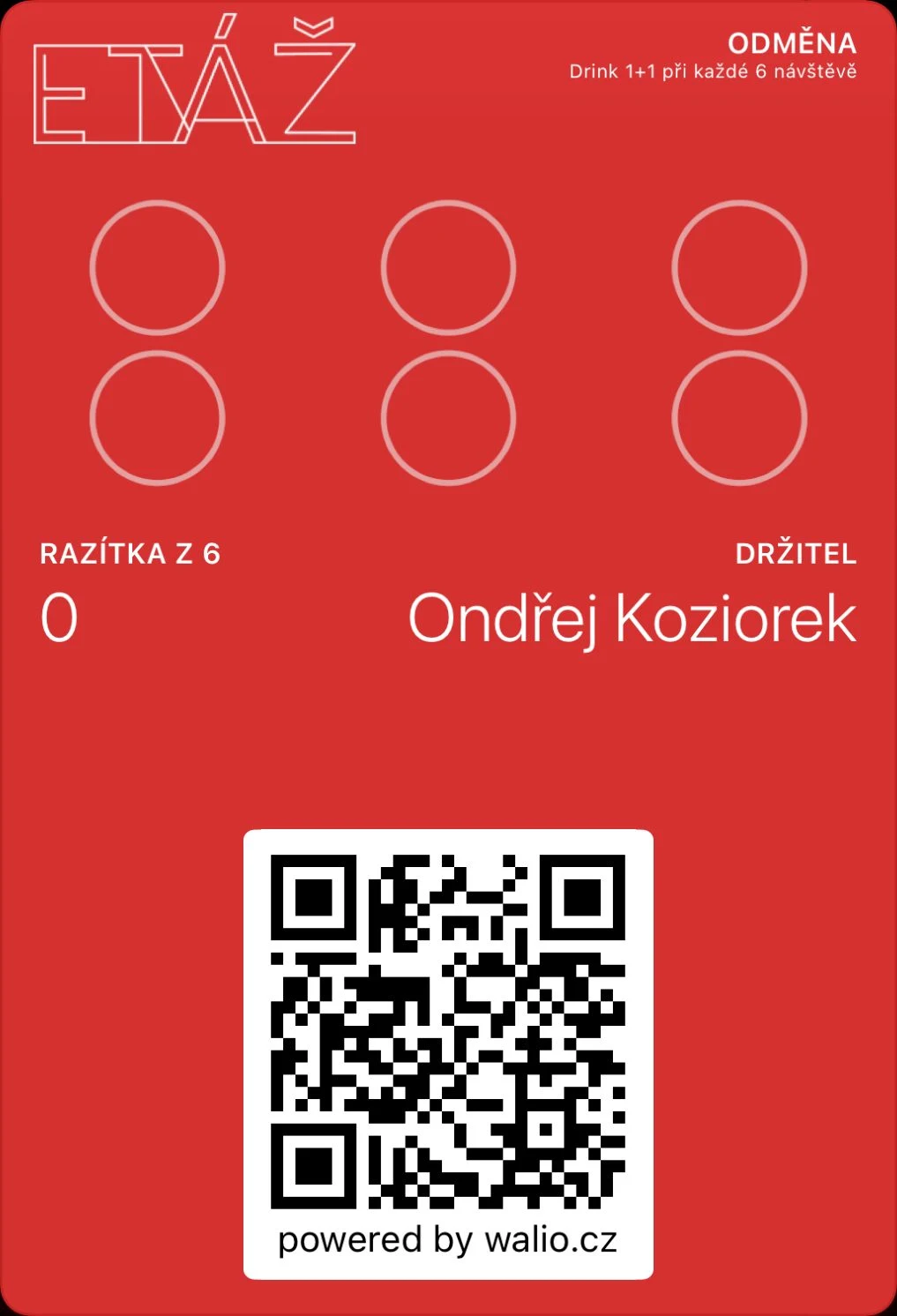
What a card in the wallet can do
- Carry state: stamps, points, visits remaining. The number can be changed remotely after issue.
- Show a QR or barcode for staff to scan.
- Push a message to the lock screen without the customer installing anything.
- Surface itself when the customer is near the venue, if a location is set.
- Carry the brand: colours, logo, field labels.
What it cannot do, and it surprises people
What can change after issue and what cannot
According to the documentation, the content of an Apple Wallet pass can be updated, while some identifying details stay fixed. The exact limits depend on the pass style and how it is updated. The pass style also decides how many fields fit where. We design the layout with room to spare so a later value does not have to push anything out.
A lock-screen message is not a free notification
It is tied to a change on the card and the customer can turn it off. Send it three times a week and they will. It is the strongest channel a loyalty scheme has and the quickest to ruin.
A card is not proof of identity
The code on a card can be photographed and passed on. For points that does not matter. For a ticket or a reward of real value the system has to enforce single use, and that is done on the server, not on the card.

Whoever signs the passes sets the price
Every wallet pass has to be signed with a certificate. There are services that do it for you and charge per card issued or per active customer per month. On a scheme with thousands of cards that is a line item which grows precisely when the scheme is going well.
Walio signs passes with its own infrastructure. The venue pays nothing per card issued and nobody can raise the price list mid-year. Watching certificate expiry stays with us, which is extra work, but it is predictable work.
The terminal is half the job
The card is only one side. The other is the member of staff with three people queuing. If scanning the code and adding a point takes more than two taps, or waits on a server, staff stop doing it within a week and the scheme dies. The terminal has to work on a weak signal and must not require a till system.
This cannot be sorted out later. Designing the card means designing what the person behind the bar does at the same time. We approach every custom application the same way: start with whoever will work with it daily.